
AI implementation
Use AI where it helps your team handle information, prepare useful drafts or find answers. We assess the task, build it into a practical workflow and agree the checks needed before it goes into use.
Advice, implementation and ongoing support · Custom quoted around the work involved
Sounds familiar?
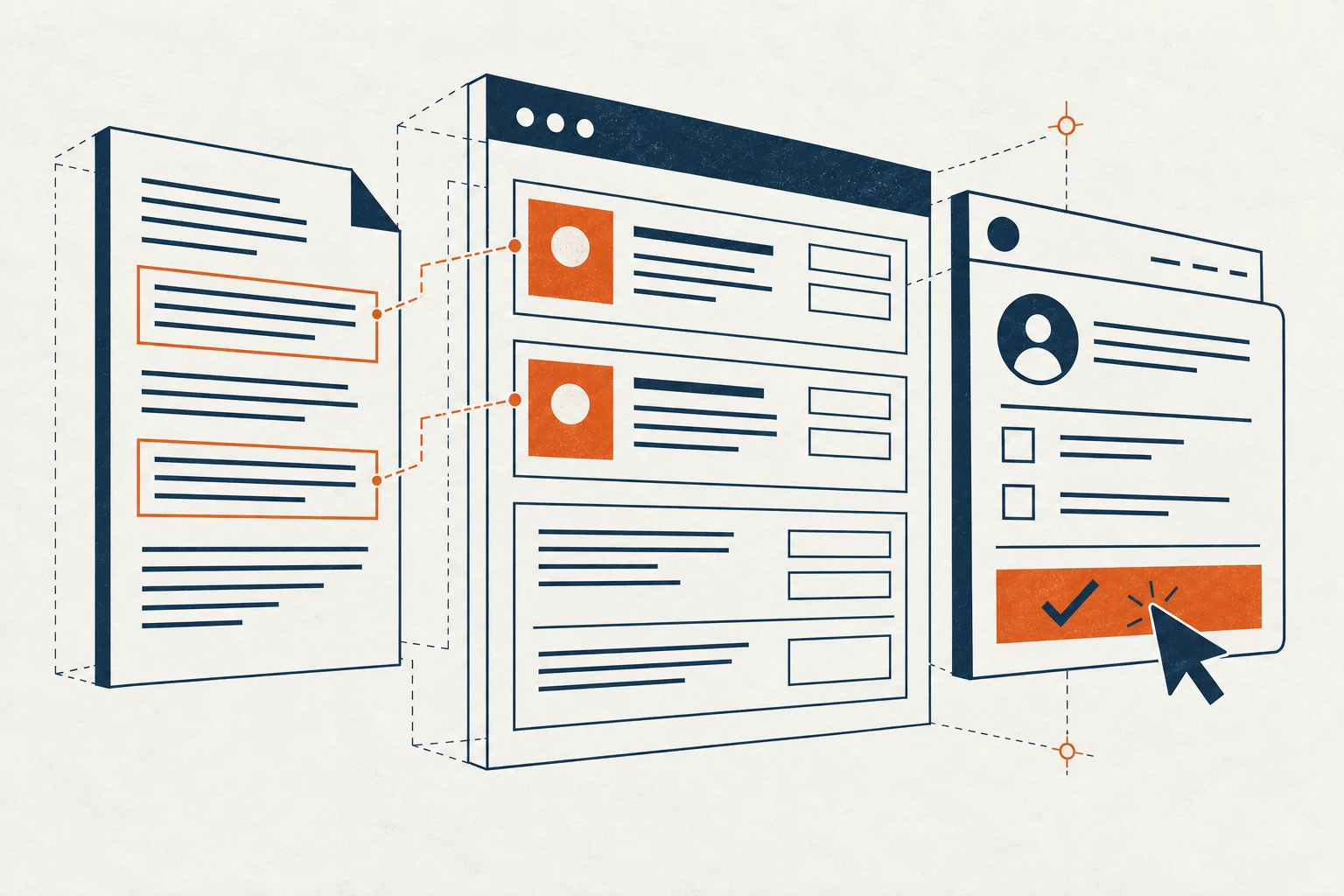
People spend time reading and sorting the same material
Emails, documents or requests need someone to extract the details and decide what happens next.
Useful information is hard to find
Answers sit across documents and systems, and the team needs a clearer way to get to the relevant source.
You want to try AI with a defined purpose
You need help choosing a worthwhile task, understanding the data involved and testing whether the result is useful enough to keep.
Where AI can help your team
Is AI right for the task?
We’ll examine the task, the time it takes and the information available. We can then assess whether AI, conventional automation or a process change is worth pursuing.
AI within existing workflows
We add summaries, drafting, classification or document extraction to the tools your team already uses. The output needs somewhere to go and someone who can use it.
Tools that work with your information
We can build search tools and assistants around your information. We’ll assess the sources, test the answers and show references when the tool supports them.
Clear data and access arrangements
We’ll establish which data the tool can use, who can access it and which providers handle it. We review retention and service settings before connecting business information.
Review and approval where it matters
We define what the tool can draft or suggest and which actions need your approval. We also build a fallback for incomplete or uncertain output.
Testing, team guidance and ongoing checks
We test real examples and failures with your team. We’ll explain the running costs, maintenance and further evaluation the tool needs.
Testing one task first
Choose a useful task
We’ll choose a small task and decide what would count as a worthwhile result before building anything.
Agree the approach and boundaries
We select the tools and providers with you, then define the data, permissions, review points and costs.
Build and evaluate
We test accuracy, failure cases, response time and cost against representative work. The results determine whether the tool is ready to use.
Introduce it and review
We’ll introduce it to a small group and collect feedback. Further development and ongoing support are quoted separately.
Questions
A predictable process is often better handled by rules and standard integrations. AI can help where work involves interpreting language, extracting information or drafting material. We assess the task first and recommend the simpler approach where that is enough.
Yes. It can produce incorrect or unsupported answers, even when using your own documents. We test it against representative work, make limitations clear and agree review, approval and fallback steps. It should not be treated as automatically reliable because it sounds confident.
We agree the information used, access permissions and providers before connecting it. Provider settings and terms differ, so retention and any use of data for training are checked for the proposed setup. We don’t assume that every AI service keeps all information private by default.
Yes. We can review possible uses or scope one task before committing to a wider build. The proposal defines the work, success criteria and costs, including any ongoing model, platform, hosting or support charges.
Also under systems and automation
Integrations and workflows
Connect your existing services and build the tools your team needs. From APIs and workflows to internal web apps, we can develop the setup, add AI where it helps and provide hosting and support.
Forms, bookings and quotes
Make it easier for customers to enquire, book or get a quote, and give your team the information it needs to take the next step. We plan the journey, build the tools and connect the systems behind them.
Tell us which task you want to make easier
What task do you have in mind? Describe the work and the information involved. We’ll help you decide whether AI belongs in it.
